Start with what a reader can understand
Read your headline, About and two recent experience entries together. Can someone recognize your work, context and contribution? Clear presentation helps readers understand your career without turning the profile into a promise of future outcomes.
You do not need a specific vacancy for this review. Use activities and interests you can explain. During a career transition, distinguish experience you have already gained from the direction you want to explore.
Give each section a purpose
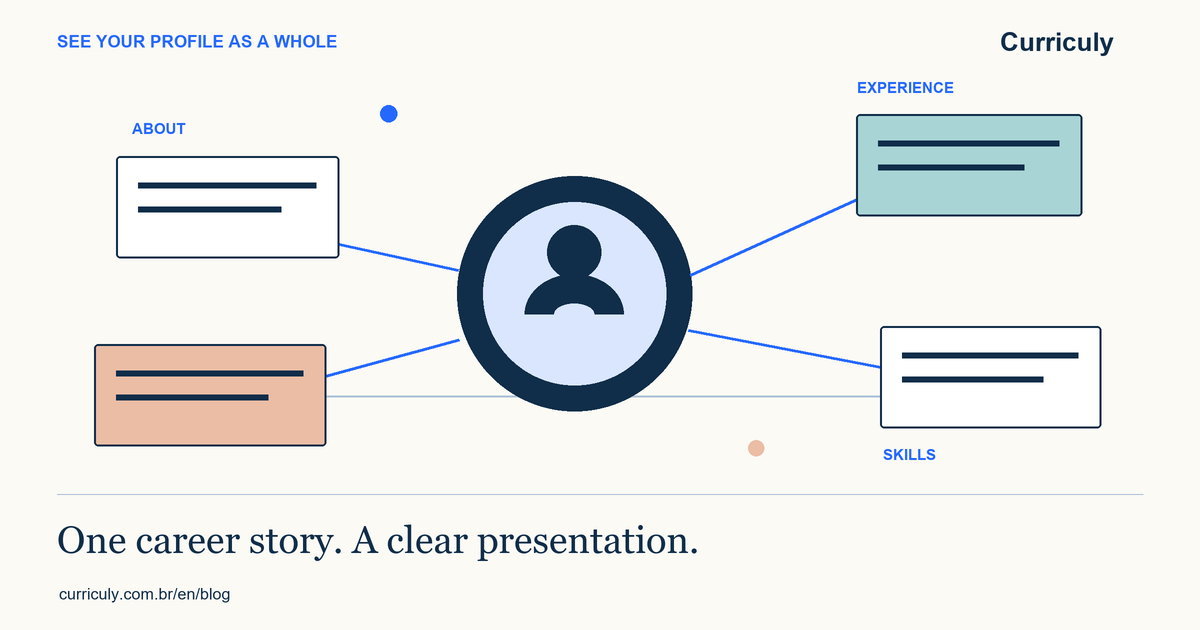
Use your headline for a recognizable summary of your work. Connect experience and contributions in About. In experience entries, explain what you did, in which setting and with what involvement. Select skills you can support with examples.
You do not have to turn everything into numbers. Qualitative results, deliverables and responsibilities help when they are accurate. Nor do you need to repeat the same paragraph in every section.
Check consistency while allowing legitimate differences
Your resume may be shorter than your LinkedIn profile. Neither is automatically wrong. Confirm meaningful differences in roles, employment, dates or responsibilities before rewriting. Punctuation and organization differences need no questionnaire.
Curriculy works from the material you provide. A section that was not received should not be described as missing from your published profile. Review suggestions, inspect your photo and banner on LinkedIn, and apply only what represents your history.
Share this guide